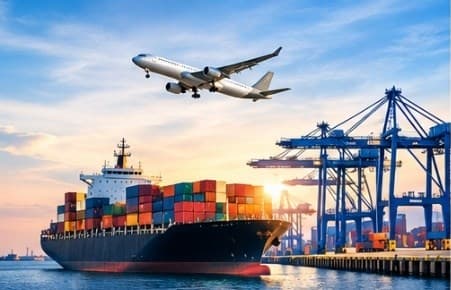
Choosing the right shipping method is an important decision for Australian businesses involved in importing and exporting goods. The choice between air freight and sea freight can influence shipping costs, delivery schedules, inventory planning and the overall efficiency of your supply chain.
While air freight is generally preferred for urgent or high-value shipments, sea freight is often suitable for larger consignments and businesses looking to manage transportation costs. The right option depends on your cargo, budget, delivery deadline and business requirements.
In this guide, we explain the key differences between air freight and sea freight and how to choose the most suitable option for your business.
What Is Air Freight?
Air freight involves transporting goods by aircraft between domestic or international destinations. It is commonly used for urgent deliveries, high-value products, lightweight goods and shipments with strict delivery deadlines.
Businesses may choose air freight when products need to reach customers quickly or when delays could affect production, sales or contractual commitments.
Benefits of Air Freight
- Faster transit: Air freight is generally quicker than sea freight for international shipments, although actual transit times depend on the route, flight availability, handling and customs clearance.
- Suitable for urgent cargo: Useful for time-sensitive shipments, replacement parts and replenishment stock.
- Good for high-value goods: Can be appropriate when speed and inventory availability are more important than transportation cost.
- Frequent international connections: Major trade routes may offer regular air cargo services.
Limitations of Air Freight
Air freight typically costs more per kilogram than sea freight. Cargo dimensions, chargeable weight, fuel surcharges, handling fees and destination charges can affect the final price. Some dangerous goods and restricted items also require special arrangements or may not be accepted.
What Is Sea Freight?
Sea freight involves transporting goods by cargo vessel. It is widely used for international trade, particularly for large, heavy or bulky consignments.
Australian businesses importing machinery, furniture, industrial equipment, building materials and general merchandise may find sea freight suitable for planned shipments.
Sea freight is commonly arranged through full container load (FCL) or less than container load (LCL) services.
Full Container Load (FCL)
FCL means a shipment uses an entire container allocated to one customer. It may be suitable for businesses shipping enough cargo to justify a dedicated container.
Less Than Container Load (LCL)
LCL allows cargo from multiple customers to share container space. It can suit smaller consignments that do not require a full container, although consolidation and deconsolidation add handling and scheduling considerations.
Benefits of Sea Freight
- Suitable for large shipments: Can accommodate substantial volumes and heavy cargo.
- Potentially lower transport cost per unit: Often economical for larger shipments, depending on the route and total charges.
- Flexible container options: FCL and LCL services can support different shipment sizes.
- Useful for planned inventory: Businesses can schedule replenishment shipments in advance.
Limitations of Sea Freight
Sea freight generally has longer transit times and may be affected by port congestion, vessel schedules, weather, transshipment and customs or biosecurity inspections. Businesses need to plan inventory and delivery dates accordingly.
Air Freight vs. Sea Freight: Key Differences
| Factor | Air Freight | Sea Freight |
|---|---|---|
| Transit time | Generally faster | Generally slower |
| Transport cost | Usually higher per kilogram | Often economical for larger shipments |
| Shipment size | Commonly used for smaller or time-sensitive cargo | Well suited to large and bulky cargo |
| Urgent deliveries | Often preferred | May not suit tight deadlines |
| Inventory planning | Useful for urgent replenishment | Useful for planned stock movements |
| Cargo restrictions | Airline and aviation security rules apply | Vessel, container, dangerous goods and port rules apply |
Actual costs and delivery times vary by route, cargo dimensions, service level and destination requirements.
How to Choose the Right Shipping Method
1. Consider Your Delivery Deadline
If goods are urgently required to meet a customer order or prevent a production stoppage, air freight may be the better option. If your business can plan around a longer lead time, sea freight may be more cost-effective.
2. Calculate the Total Shipping Cost
Do not compare transport rates alone. Consider pickup, export documentation, terminal handling, customs clearance, duties and taxes where applicable, delivery, storage and other potential charges.
Ask for a quote that clearly explains what is included and excluded.
3. Review Cargo Weight and Dimensions
Air freight charges may be based on actual or volumetric weight, whichever is applicable under the carrier's rating rules. Sea freight costs depend on factors such as container type, shipment volume, route and destination charges.
Accurate cargo measurements help avoid unexpected adjustments.
4. Consider the Nature of Your Goods
Perishable, fragile, high-value, oversized or regulated cargo may need specific handling, packaging, permits or transport arrangements. Confirm the requirements before booking.
5. Plan for Customs and Delivery
Both air and sea freight shipments entering Australia may require customs declarations, supporting documents and compliance with applicable biosecurity rules. Choosing a suitable freight partner can help coordinate the shipment and identify potential issues early.
Can You Combine Air Freight and Sea Freight?
Yes. Some businesses use a combination of shipping methods to balance cost and urgency. For example, essential stock may travel by air while bulk inventory is sent by sea.
This approach can help maintain product availability without sending every shipment through the more expensive option. It requires careful planning, accurate demand forecasts and coordination between suppliers, freight providers and receiving teams.
How Venture Freight Can Help
Venture Freight supports businesses with international air and sea freight, customs brokerage and coordinated transportation services. The right shipping arrangement depends on your cargo, origin, destination, timeline and budget.
Before booking, discuss your shipment requirements with a freight professional to understand the available services and potential costs.
Need help choosing between air freight and sea freight? Contact Venture Freight to discuss your shipping requirements.
Conclusion
Air freight and sea freight both play important roles in international trade. Air freight is often suitable when speed is essential, while sea freight can be a practical choice for larger shipments and planned inventory movements.
By comparing the complete shipping cost, delivery requirements and cargo characteristics, Australian businesses can make more informed logistics decisions and build a more reliable supply chain.
Related service
Worldwide Air & Sea Freight →